

S3. Ep 8: Talking about the who, what, why, and how of inclusion with Tamara Byrne and Derval McDonagh – Talking about all things inclusion
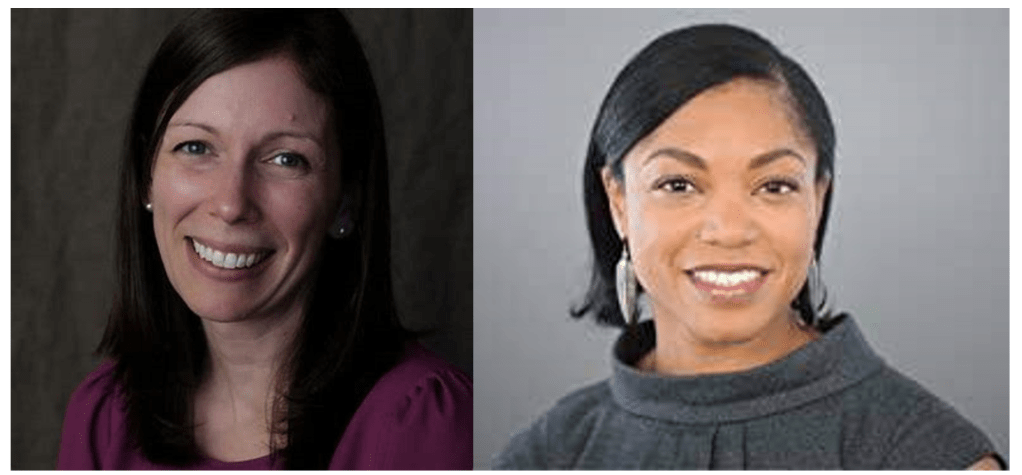
In this conversation Jenna and Nicole talk about the importance of creating inclusive learning environments that cater to diverse learners’ needs, balancing advocacy and agency. They discuss the updated Universal Design for Learning (UDL) guidelines 3,0, prioritising equity, inclusivity, and student-centered learning. Jenna and Nicole then talk about the need for progress over perfection and creating spaces for learners to navigate their learning, pursue meaningful goals, and reflect on feedback. They also emphasise the importance of representing diverse perspectives and prioritising collaboration, interdependence, and emotional growth in a student-centered and teacher-centered approach.
Resources from this episode
Transcript of this episode
SUMMARY KEYWORDS
UDL Guidelines 3.0, learner, learning, students, teachers, agency, educators,
SPEAKERS
Jenna Gravel, Nicole Tucker-Smith, Mags
Mags 00:00
Welcome to talking about all things inclusion, a podcast where I get to meet and learn from people in the field of inclusion in its broadest sense, that inspire me. I hope they’ll inspire you too. Today, I’m talking with Jenna Gravel and Nicole Tucker Smith.A Senior Research Scientist, Jenna gravel works to connect research and practice by supporting educators to apply UDL to the classroom in order to engage all learners in rich, sophisticated learning opportunities. As the founder and CEO of lessoncast, Nicole helps schools and other organizations enact, professional learning initiatives focused on inclusive teaching and equity best parctice, she leads the Jumpstart. PD, a community of educators to share ideas, spread resources, post tips and dialog on key areas of interest related to designing and delivering effective PD. Together, these ladies have led the charge for UDL equity to rising the review and redesign of the UDL guidelines 3.0 for from an equity perspective, Nicole and Jenna, we’ve known each other for a good while now, but over the last three years, I’ve had the privilege of working closely with you on this amazing UDL journey to equity that is now near completion for this edition anyway.I’m so delighted to have you on the podcast today to speak with you more about this journey, the new guidelines, 3.0 and your work, your continued work to promote, promote the tenets of diversity, equity, inclusion and social justice in education and society.
01:32
Thanks you so much for having us, Mags. We’re so excited for this conversation.
Jenna Gravel 01:36
Yes, thank you, Mags. We’re excited to be here.
Mags 01:39
Oh well, I always love chatting with you, and I’m going to try not to go off on our usual tangents today. And I know I know you very well, and my listeners will know a little bit about you, but just for those who are new to the podcast, or new to UDL. Can you start off by telling us a little bit about yourselves, your background and what it was that inspired your inclusion and equity journal journeys.
Jenna Gravel 02:03
Well, I can start us off. I’m Jenna Gravel. I am a senior research scientist at CAST, and I really appreciate this role at CAST because I my work kind of sits between our research and development branch at CAST and our professional learning branch. So my research really explores teachers trajectories as they come to learn about UDL and thinking about the ways that we can be supporting educators to design more inclusive and more equitable learning environments. And another big chunk of my research has been this work on updating our UDL guidelines and our work with expanding the guidelines, and it just has been wonderful to collaborate with Nicole, and we’ve really been able to kind of embed a really strong research component to this process. So that has been another big focus of my work. And I’m also a former Special Ed teacher. I co taught with the English language arts teacher and the social studies teacher and a middle school setting, and I would just say, kind of in terms of my inspiration, really goes back to my parents. Both of my parents worked in inclusive education. My mom was a special education teacher for more than 30 years. My dad actually first got a job at a separate school for kids with disabilities, and the very first thing that he wanted to do as the leader of that school was shut it down, and all of the kids went to their neighborhood schools. And he kind of reimagined the school as an organization to support individuals with disabilities in the communities, and they started doing job supports for individuals with disabilities. They started an early intervention program for kids with disabilities, ages birth to three and their families. So I was always just kind of raised with this real commitment to inclusive education. And I think it was my parents that really helped me to to kind of bring to the surface that ablest structures that were embedded around us, and really working to try and disrupt those. So I feel really lucky to have had parents that really kind of brought me up with a strong commitment to inclusive education.
04:18
And so, this is Nicole speaking in a little bit about myself. So currently, today, I am founder and CEO of lessoncast. But prior to that, I was a middle school teacher that’s a in the not primary, but not secondary, the middle areas, your audience, and also a school leader, a district leader, work at Johns Hopkins University, and all of those experiences helped me see how vital professional learning is in order to improving teaching and learning outcomes. And so I wrote the book, Supercharge your Professional Learning, because a lot of professional development teachers go to reluctantly. They’re not really excited about it, and they’re not engaged, and then they certainly aren’t implementing what we’re asking them to do. And so really, one of my goals is to make professional learning something that is refueling rather than fatiguing, and also helps educators put practices into action. I also do a lot of work with school leaders on how to create the climate and the culture to support change initiatives. And in addition to Universal Design for Learning, my team and I do a lot of work around representation in curriculum. How are we representing people, perspectives, ways of knowing, power dynamics in the curriculum that we teach every day to students.
Mags 05:45
so that is a whirlwind of your backgrounds. If people knew what you actually did, that would be amazing, but you’ve touched upon some keywords that are bringing us back to the crux of this conversation, which is the redesigned guidelines, 3.0 and Jenna, you talked about the trajectory, the trajectory of teachers, the trajectory of professional learning, and then communities. And Nicole, you picked up in that communities and the culture and how we need to change those cultures as well. And both of you I know are disruptors and disruptors in a very positive way, in that you challenge us into those what you’ve described to me and taught me about safe but brave spaces where we’re leaning into our discomfort and we are addressing what we need to address so that we can be more inclusive teachers and more inclusive people in general. And that’s what I love about the new guidelines, is that they have actually left the safety, safety of the comfortable space and while there is still safety. It’s brave. We have to lean in. We have to address our biases. We have to consider every part of our students identity, not just the academic part of their identity. And I’d love to know or for the listeners to know, because I’ve been on some of this journey with you, where this started, and where some of the new language and the new prompts, because they’re no longer checkpoints, the new prompts emerged from,
Nicole Tucker-Smith 07:27
well, I think the impetus behind guidelines 3.0 and Jenna can speak to this, was a call from the field. Educators were saying that the UDL guidelines 2.2 those guidelines were helpful for considering barriers around the way in which the instructional materials may be perceived, or the ways in which students can respond, but it didn’t address barriers like ableism, and it didn’t address issues that are real problems for learners and that institutions really need to examine and my role. So I have worked with cast for several years now, and I have always also brought my lens and the work that I do around equity and belonging and just what? What is representation? I had a different take on representation, right? What does representation look like in the classroom? And What do teachers need to consider about their own backgrounds and identities because they’re bringing their whole selves to the classroom, and to not talk about culture and climate is to assume that the culture that is dominant is the de facto default, and ignore that students come with their own culture, their own experiences, in an asset based way, not a deficit based way. And so I was asked by the CEO at the time at CAST to co chair this initiative with Jenna, because I’ve been doing the work in blending. I used to call it a UDL plus equity approach, and I’ve written several articles about that. And so I’m committed to every learner being able to thrive, like creating spaces for every learner to thrive, and if, and I do believe that guidelines 3.0 is closer to doing that.
Mags 09:23
And Jenna, what do you think?
Jenna Gravel 09:24
Yeah, I would, I would add too that I’m just so grateful that this really has felt like a community driven process, and that was one of our goals with launching UDL, rising to equity, launching this process to update the guidelines way back in 2020. Is as an organization, cast knew that we couldn’t do this work alone, and really that we shouldn’t do the work alone either. And we really prioritized from the start listening and learning that was really like the the beginning of this stage of work is we just knew we had so much to learn. And we really prioritized. Is connecting with individuals, maybe who were’nt a process, a part of the process of working on previous iterations of the guidelines. And I think the advisory board that we were able to establish that guided our work, that guidelines collaborative, that you were a part of Mags, and we were just so grateful to have your support. That was another wonderful group. We have a young adult advisory board. We’ve conducted lots and lots of focus groups, and all of those pieces were just so important to kind of helping us to really understand what are those gaps and those biases that are inherent in the current version of the guidelines, and getting ideas for what we do about those and how we make the guidelines a tool that’s in more kind of explicit conversation with other asset based equity forward approaches.
Nicole Tucker-Smith 10:51
I also, Ijust wanted to say that the other thing in doing the work and being able to release these updated guidelines is I think it’s important for Jenna and I to iterate and then reiterate that nothing is missing. We’re not losing anything in this new version of the guidelines. But there is an expansion to consider where bias is a barrier, to consider how identity is a significant part of variability. And I think for folks who are implementing UDL, some comments are, well, this part of it isn’t research based. It’s all research based. If there’s something that’s unfamiliar, I encourage listeners to learn and to read the research, or read the articles, or, you know, just to be more curious than certain. This was a very thoughtful, intentional process. It’s taken us nearly four years. We didn’t randomly throw anything out there
Mags 11:53
And with the older version that people just again, got so comfortable with it that they stopped thinking about the research. They stopped they stopped being curious, where as this one, and being part of of the collaborative that that had that curiosity embedded into it, where people were challenged to ask questions, to go and look not just at the the mainstream research, but to look at what minority groups were doing, the voices that we normally don’t hear, what they were doing, and even the fact that you brought in the student voice and into this shows the collaborative process. This was also the first set of guidelines that also had a global perspective as well. That was was going, we’re bigger than North America now, and we need to look wider. And I can see that in in the language and Nicole, when you talked about representation meaning something different to you, it did to me as well. And I’m going to say I got that from you. I didn’t just wake up going, Oh, I think it’s something. I think it was our early conversations. And I always struggled with the old representation because I couldn’t see my version, whereas I think it’s so explicit across all three elements of it now, and I’m just wondering, do you have any favorite terms in there? Is there a new prompt that you love that just jumps out at you because of this explicitness, of this leaning into the discomfort and being brave and the explicit this is what we’re doing.
13:28
Yes, so my favorite, and oh, don’t get me wrong in misquoting it here, but my favorite is around so I do love the updates to multiple means of representation. I will say that my favorite is around cultivating multiple ways of knowing and making meaning. And I think that for so long, and not all schools, but many schools, have prioritized certain ways of knowing and certain ways of showing learning, but especially with the knowing part, that these are more academic ways that it’s it’s more academic to read it than to hear it. You know, there are historical reasons as to why that has become a myth that we now believe. And so I think it’s really important for us to think about we’re creating equitable spaces, to recognize that there are multiple ways of knowing and to create spaces for students to be able to employ the ways of knowing that work for them at given times and spaces so that that one’s my favorite.
Jenna Gravel 14:32
This is a hard question. I feel like there’s so many that I’m so excited about
14:37
They’re all your baby
Jenna Gravel 14:39
Exactly, but I would say so when we’re thinking about the principle of multiple means of engagement and the guideline level options for sustaining effort and persistence. We’ve proposed a new where, like you said, Mags, we’re shifting away from the word checkpoint. We think it might be prompts. It might be another. Because we got a little pushback in some of the incredible feedback that we received during the period of public comment that maybe prompts wasn’t exactly the right word, so we’re still kind of playing around with what we’re naming those. But one of the prompts with that guideline is foster collaboration, interdependence and collective learning. And I’m going to bring that one up now, because I just so appreciated, like, the process that we had to get to including that notion of interdependence. It was something that came out very strongly in focus groups, but it came out most strongly through our young adult Advisory Board, where they were asking some really challenging questions and wondering, did the current version of the guidelines somehow imply that independence was the goal that we’re all working toward, that being able to do something alone was best, and are the guidelines kind of like bringing you there with kind of the access, build and internalize rows, those ways that the current version is naming the horizontal rows and ending up and internalize that signaled to them something that was so inward and that were we implying that the goal here was independence, and they so strongly and so compellingly shared, like how important interdependence was to them and to their lives and and that that notion really was not highlighted in the current version, and we did a lot of learning from them. It was a conversation that kind of spanned multiple meetings with that young adult group, but they really inspired us to make sure that that idea of interdependence was really kind of centered in the guidelines.
Mags 16:41
Yeah, and do you know that actually is such a good example of what was implicit in the old ones. So if you’d have an understanding of them that you knew that was there, but if you were new to them and you were reading them, it could absolutely be missed. And the fact that it was the young adults and the student voices that challenged you on that just shows how important it is. I know I asked you to pick one prompt, or I’m curious to know what other words came up for that, and I suppose the listeners you would be listening to this when the words are finalized, we’re recording while it’s still in draft form. I actually can’t pick one favorite prompt, but I can pick a favorite guideline, and it’s the options for emotional growth. And I just love this, because I had such huge issues with regulation and self regulation and the old ones, because I thought it was an unachievable standard or goal for our students, because the adults did all the regulation based on our standards of what it was. So when I look at this and I look at the prompts below, it’s so student centered, but you know something, it’s also teacher centered, because we need to have this emotional growth with ourselves and with our community of learners. So like this is the biggest turnaround for me in the guidelines, is that this, this whole one, is nearly all re- developed. And I’d love to know more about your thinking behind that. And I’d love to know if the student voice had any opinions on this one as well.
18:20
Well, yeah, there was the this. This came up for our student learners, but also it came up a lot with more of our adult participants, but they were recalling being a younger student and having to be almost penalized into self regulating themselves through an unjust system. Yeah, and told to cope, and, you know, deal with the inflexibility and, and I have to say, Jenna really led the call in this one where she was like, we cannot. We cannot continue to encourage designers and learning spaces, whether you’re a teacher or you’re in workforce development, whether you’re primary or in higher ed, we can’t continue to guide folks in a way that causes harm. And so that was a big concern for making some of those changes,
Jenna Gravel 19:20
and we thought a lot like throughout the focus groups Mags, I know this was a real focus of some of the conversations we had with our guidelines collaborative also with our advisory board, just how that notion of self regulation is so opened up to bias and one person’s idea of what it means to self regulate in the right way, and it just felt like we needed to do something to to address that. And we got a lot of wonderful ideas during our process of of collecting data, but it just felt like that was one where there was a vulnerability there to bias in. How might we address that in the new guidelines?
Mags 20:01
Yeah, and I think it’s just done beautifully, and it’s not, as I said, it’s not about just looking at your own emotional growth. It’s like that second one develop awareness of self and others. It’s, this is the one where it’s really about that communication and the relationship part of UDL, because UDL is about the relationship between the teacher and their students and between the students themselves as well. And I love that one, another one that I really like, and I’ve been having a lot of conversations with language teachers recently. So I keep coming back to the new guidelines, because they’re going, I can’t I can’t figure out what to do with the the now old guidelines. And I bring them to three different prompts. When I’m talking to them about this, I bring them to nurture joy. I don’t go into the play. I stay with the nurture joy in learning a language. And then I bring them to cultivate understanding and respect across languages and dialects, which is so important in Ireland because we have four main dialects, and then we’ve all our sub dialects within that, in a country where not everyone speaks their national language, and then addressing the bias in the use of language and symbols, because sometimes speaking the language can have a stigma to it, or it’s like you must be a nationalist, or you must be Catholic here in Ireland if you’re speaking that. And just so, I was teaching a Protestant friend of mine while I was in Boston how to say hello in Irish while we were over there, and say hello to him in my dialect, which is a southern one compared to the dialect up north. And I’ve had the same conversation with teachers that are trying to teach their students Spanish, teach them French, letting them listen to how an American person speaks French, how an Irish person speaks French. And it’s really resonated with them. And they’ve come back to me, and they’ve went, I’ve got it, and some of them for their assignments are using that for their small change. So I’d love to know these ones didn’t resonate with me when we were in the collaborative but when I saw them in writing, and I could see those connections and the conversations I’m having with teachers have just blown me out of the water and opened windows for teachers to now take a different approach and give them permission to actually move outside their dialect or their way of of speaking and learning and teaching.
22:34
I love those. I love what you said about you know that these are new windows right to gain some insight into how we can design more equitable spaces, and also this idea of giving permission. It’s not that the guidelines didn’t say to promote respect, but this adds that consideration, ah, we need to, because it’s, it’s the respect across languages and dialects that is huge, this idea, you know, I I think about all the time, like so much of the research that we’re looking at right now around this idea of agency, learner agency, a lot of the work actually comes in language teaching and teaching languages, or looking at languages and how they show up in learning spaces, and how learner agency is connected to that. Because if you are limited in what language you are being allowed to use, or told that your language is less than how is that going to impact your agency in the space? So the the fact that these prompts or considerations are are really prompting new thinking is very exciting.
Jenna Gravel 23:41
And I love to Mags how you’re kind of picking up on the ways that we’re weaving the idea of addressing bias across all three principles. Yes, we were very aware that we didn’t want that, you know, idea of addressing bias to be contained to one guideline under one principle, right? That this is something we want to be thinking about across the guidelines as a set of suggestions. So that was something that was really important to us, like making sure that we were weaving that in. And that was true of lots of themes that came up across the Advisory Board, the guidelines collaborative, our young adult collaborative, our young adult Advisory Board, the focus groups, like, there were some very strong themes that came out, and we were very aware that these aren’t themes we want to contain to just one guideline or one prompt or consideration. These are themes we want to weave across the guidelines. So that was certainly a challenge, but something that we really were trying to be intentional about
Mags 24:41
I think it’s there. And I know you talked about like the interdependence of the learners, but I think there’s an interdependence that’s much more visible here in these three principles than was in the previous ones. And I’m going to continue that thread into action and expression and address biases related to modes of expression and communication. I mean, for me, that’s huge. That’s even bigger than the language space, because this is where our students have their voice, and again, it was implicit in the old ones. But this is out there in your face. This is their modes of communication, their modes of, of expression,and address it. It’s not even respect iy. It’s address the bias,
25:29
Yes, and this shows up and it’s and now it’s becoming so I’m seeing it so much more now because I was more aware of it now, this idea of addressing bias and modes of expression, because even the the previous guidelines would prioritize things like using captioning, but de prioritize sign language, different sign languages. And so there’s a bias there, right? And sign languages are their own language, but not, not, not looking at the bias in relation to modes of expression were is very harmful, because if that’s if that’s something, if that’s a way which you identify and you’re limited in how you’re able to express yourself, then that’s a huge impact in terms of how you are perceived as a learner, and how you can even perceive yourself as a learner.
Mags 26:20
Jenna, do you want to start on anything
Jenna Gravel 26:22
I would add to Mags, Your comment just saying about how some of these updates and expansions are just making things that were implied more explicit. That is definitely what we were trying to do in a lot of situations here. But I think that’s also been a theme of some of the feedback that we’ve been receiving during this period of public comment and saying, Wow, you know, I was wondering if the guidelines 3.0 were going to feel and look so different, but they’re not feeling and looking that much different. It’s just making those connections that more explicit. And we were thinking a lot about that for educators who might be new to UDL or might be new to ideas of other asset based pedagogies. With the current version, making those connections is a challenge, right and and really hard to do on your own, and we hope that with this version, those connections are that much more explicit, and so we’re not asking educators to kind of do the work and finding those connections, but we’re trying to start making those connections, and then there are great jumping off points for diving deeper into how UDL might work in complementary ways with, you know, something like culturally sustaining pedagogy that we hope that now those kind of those hooks are a little Bit more explicit to educators.
Mags 27:40
Yeah, and I think it, it removes the, oh, I misread it, or I misunderstood it’s there, you know, as the teacher, I no longer have that excuse, you know, like in the old one, you had optimized relevance. So here you’ve got relevance, authenticity, value. So again, I have to be a value and authentic to the person. So you can’t just put one thing up and again, I in action and expression. It set meaningful goals. Like the language is there that, like, the goals have to be meaningful. You can’t just throw anything up on the board and say, we’re going to do this. It’s bringing us all back to the student. And we know UDL has always been student centered, but I find the language of this very much around that agency you’ve already mentioned, for the student, but also agency and responsibility for the educator in the space with them. So I think it goes much broader into the educator is no longer just the giver of information, that they’re actually a real part of this community, and that co- construction that was always in UDL is so much more evident in this
Nicole Tucker-Smith 28:53
one, yes, yes. And that was we really Jenna and I really tried to, as we solidified the language, use verbs for those prompts and considerations. Use verbs that could be the teacher doing this, could be the student doing this, that these are that both are able to operate and apply the guidelines. And then we’re also, we do want audiences to know that in schools, teachers do have the greatest responsibility, right? They do you, they have the greatest responsibility. Yet everything should not revolve around them. And so that’s what that’s the fine line, the balance that we were trying to achieve,
Jenna Gravel 29:32
and that came out with some of the young people who we were talking to too, saying, I don’t always want to have to be advocating for myself and in a position where I’m always having to advocate for access. So thinking about what are those as educators or designers of learning environments, those things that we are responsible for, and then that we can work collaboratively with learners to design as well. And we got some really helpful feedback back in our period of public comment too, that there was like a little confusion in terms of the verbs that we were proposing. Like Nicole said, we were very intentional about selecting verbs that we thought could work from both a educator or designer kind of perspective as well as a learner perspective. But I think we can be a little bit more explicit in our free in our framing, and like, kind of be explicit and clear in our in that intention. So we actually are really excited that for guidelines, 3.0 we’re actually going to have a full introduction to the guidelines. And that’s something that’s missing in the current version. If you go to the UDL guidelines website now, you’re just kind of thrown in to whichever principle you want to click on the link, you know, and start exploring the guidelines and checkpoints. So we’re excited to kind of make, make coming to the website feel a little bit more welcoming and have more of an introduction, and there we can be more clear in our intention of we’re trying here to to share guidelines and considerations that, you know, educators, depending on the goal. Maybe it’s the educator, maybe it’s the learner, or maybe it’s the educator and learners working collaboratively in a in a co design kind of environment, yeah,
Mags 31:14
which, you know, I think leads to my most favorite change in the guidelines of lots that I like, but it’s the removal of expert learner. It’s the introduction of agency. And that final goal, where it used to be the goal is expert learner, individual and collective learning, that is. And then it’s a clear statement under each one. And I just love that, because, again, it’s going back to that co-construction. We are here together. There’s things we do in our own journey, then we come back together. And that agency, I think, has so much power as as word in itself, but within the whole UDL 3.0 yeah, we’re really, actually really excited about this shift and and learner agency, where you know expert learning, you can view it as a portion of learner agency. Learner agency is actually broader. And you know learner agency does mean that you know the individual has autonomy and can pursue goals and have aspirations. But agency also requires looking at collective learning. You can’t have agency without looking at collective learning too, and that’s what we thought was really important. And a lot of the research, and we’ll be highlighting all of this in the materials and when these are fully released, but a lot of the research around agency emphasizes the need to examine power structures in schools, because whenever we’re aiming for agency, the natural tendency for schools is to take agency away. Yes, and even as students are in spaces that may be attempting to broaden agency, depending on the age of the students, younger students, not so much, but the older they get, they’ll be like, Oh no, just tell me what to do, because not used to having spaces with agency. And they might start by just kind of dipping their toe in the water and replicating structures that they are already used to, but the more we stay committed to we’re creating spaces for learners to navigate their learning, for them to have meaningful goals, to pursue those goals, to be able to reflect and apply feedback and grow. And it’s about progress over perfection. The more we can create those spaces and stay committed to it, I think the just the more, the more powerful, more joyful, more, you know, just inspirational our learning spaces will be, yeah, and
Jenna Gravel 33:37
I think our process to update the idea of expert learning is really kind of symbolic of the whole process. Like before we even launched, there was a very strong call from both practitioners and researchers that we need to attend to this idea of expert learning, that there are some some barriers here. As soon as we started with our focus groups, with our advisory board, the guidelines collaborative, it kept bubbling up that there was a lot of concern around the idea of expert learning, that, just to give some concrete examples, that the the notion of expert kind of implies that there’s a finality to learning, or it implies that there are those who are experts and those who aren’t, and so there’s some sort of, like exclusivity associated with the idea of expert it also, you know, might kind of bring in kind of a deficit orientation that you know somehow, like, do you need UDL to become an expert learner and and not recognize the fact that we’re born as expert learners, right? Little babies are expert learners as they are exploring and navigating their world. So there was just such a strong call from even before we launched this process to really carefully examine the notion of expert learning. And then as we embarked on the process, in both the research and, you know, listening and learning from practitioners, so much concern. And and then we had the daunting task of trying to, like, you know, synthesize all of this information and feedback that we’ve collected and and try to come up with a proposed update. And I think even with the the update that we shared for public comment, knowing it’s not quite right, like we still have some refining to do, we’ve been getting some really important feedback from those who submitted their feedback forms and others that we we talked about of ways that we might refine it with the final version to maybe more fully, kind of strengthen the idea of learner agency, and even just kind of logistically, like when we have in the draft right now as the goal of individual and collective learning that is. And then we have the practices like, that’s kind of a lot to say as as the goal, right? Like, that’s hard to communicate when with UDL, like, the goal is so important. And does that feel a little too kind of um wordy or clunky, right now, is there a way that we can strengthen that and refine that to be a lot more direct. So we’re still kind of refining that now. So I just feel like this whole this whole kind of process to expand and update expert learning really symbolizes this process. It’s been so community driven, so research driven, and so iterative, like Nicole and I are going to meet later today, and we’re still going to be talking about how we want to refine it based on the feedback that we’ve been receiving. So it’s a really nice way to kind of represent a lot of the work that’s gone into the project,
Mags 36:33
absolutely. And I know so these are still a draft, and I know one of the other conversations you’ve been having is about how the graphic looks visually. So here, first, I’ll explain to the audience the the three layers, for want of a better word, of of each guide, each principle, you’ve access at the top and you’ve agency at the bottom, but you’ve a double arrow, so you’re representing that this is a continuum, because, again, context is really important in UDL, you don’t reach a goal and finish it. You could be learning something new. You could be you could have a bad day. Something could have happened in your life where you need to move from where you are on the continuum, maybe just take a step back for for a day, or a couple of classes, or you’re moving forward in an area that you’re really interested in, and I love that it’s continuum here, rather than three very clear, you’re here, here, here In 2.0
37:29
well, you’re one person. No, a lot of people did’t like it, we liked it
37:42
We’ll see, we’ll see how, um, we’re still trying to communicate it as a continuum and respect the fact that some folks like rows. So it’s a balance. It’s,
Mags 37:52
I mean, I’d love to see, and I know this is impossible. I’d love to see a circular one, but that’s not going to be accessible to people trying to navigate it. But like I think this one is really trying to show that continuum that wasn’t explicit in the last one. Again and again, maybe it’ll be part of the introduction. But again, people who’ve had the opportunity to really embed themselves in UDL know how important context is. So a continuum is needed. If it’s context specific, you can’t just say this is where a learner is at any given day any given subject. So I do love it.
Jenna Gravel 38:31
And I was going to say, Mags, I love your idea of thinking about other representations too, like you were saying, Could we create some sort of circular representation? And that’s definitely a theme that came out, you know, across all of our data collection during the process, but also during this period of public comment too, is people are really curious about what other representations of the guidelines might look like. So Nicole and I are committed to updating the graphic organizer version, but we are so excited to explore other representations and and learn from, you know, folks in the UDL community, how might they represent the guidelines. So we will offer one representation when we offer, when we launch guidelines, 3.0 but it’s exciting to think about the other ways that we could be representing like, that kind of connection. And like you were saying, like the the ways that the guidelines and the associated prompts or considerations, that they all work together in a cohesive way. There’s lots of other ways besides a graphic organizer, to represent that
Mags 39:36
absolutely. And I don’t know if it was with 2.0 or the earlier ones, but I do remember you have that wheel where you could turn it around. You know, for somebody who likes physical you have that wheel. And with technology, now, I just think You’ve so many opportunities. But for me, the continuum is obvious. They’re seeing something in a circle. Would just be, Wow, we got love hearts put in a love heart. I mean, I. And but I just I, I’m guessing you can sense the excitement that I have about this, and I like I’m already delivering the draft guidelines to my students, so I’m going, this is what’s coming up, and they’re seeing it. And students who I was struggling with at the beginning of the year with the old guidelines, who were very much I can’t do this in my subject, are now going, Oh, I can see something there. But this is going to lead me to my final question, because I promised you I wouldn’t go on tangents, is that you’re very much moving towards a global perspective here, and one of and I know you’re aware of this criticism, and my students are always going, are always giving out to me about it is all of the examples are American. Are we going to see more global examples? Have I just given you a new job? You’ve just finished this one. Is that the next step to gather these global examples so that the Irish student teacher, or the Irish practicing teacher, can see what it looks like in their context.
Nicole Tucker-Smith 41:01
So one of the goals it’s not going to happen with the immediate release of the guidelines, but one of the goals is to collect stories so that people can see this is what this guideline looks like in action. And we would love to collect stories from around the world. Jenna and I can only tell our stories, yeah. So we have to invite stories and and have them in ways where people can see different contexts. That context includes subject areas, but it also includes the country or the part of the country, or, you know, in in where I live, just in our one state, we have urban, suburban, rural, those are also different contexts. So yeah, I
Mags 41:48
love that you’re actually calling them stories and not examples. And I asked you about examples, but I think you’re absolutely right, because UDL isn’t always has been about the journey, yeah, so I think calling them stories is lovely. We are coming to the end of our conversation. You’ll be delighted to hear and I’m wondering, do you have any resources for further independent learning that you would like to share with us today? And I know there’s going to be a whole new website, and when we publish this, I will put the link to that, because I know it’s not there yet. But is there anything else that right now you’d suggest that people look at, listen, to, read, watch.
42:27
So I get asked this question a lot, and my team and I, we, actually, I don’t know if your listeners are interested, but my team and I actually, we are putting together a collection of resources, but it is so labor intensive that we can’t do for free, like, so there’s like, a monthly subscription. People can stay on for one month or a whole year if they wanted to, but really they can dive into and we also take requests, like, if people are like, give me more information on this. But there’s so much about just understanding bias and how it shows up, really understanding what does it mean to practice empathy, right? What does that mean? What does it mean to do? What is if someone’s sitting and saying, I don’t know, what ways of knowing is, well, we’ll help you. So that’s something that we’re doing. And then just and just so people can start learning now, if they aren’t aware of it. But yes, there will be the full website with descriptions and the stories will be a work of progress and
Jenna Gravel 43:24
for right now and still, instead of having to wait until that website is ready, we do have the graphic organizer draft that’s available now. We have the full draft of the proposed updates that’s available now. We also did a summary of proposed updates, because we recognize that the full draft is quite lengthy. We wanted to just make sure that we were communicating the detail and the rigor of the process, but it made for a very long document. So we also have that summary of proposed updates, which is as a web page. We also created a video that Nicole and I did to kind of introduce those overarching themes, and we have a downloadable kind of flyer of the summary as well. So those might be helpful as everyone’s waiting for the launch, and I did want to remind everyone, too, that we still have a survey that’s out now asking people about the resources or supports that they might like in order to start feeling confident and competent with guidelines 3.0 and that survey is still going. So we did have the period of public comment ended on April 15 to share feedback, but that resources and support survey is still ongoing, and we’ve been getting wonderful feedback and just wonderful ideas that people are sharing with us in terms of the different kinds of resources and videos and materials that we might be able to create at CAST to support people to start applying UDL 3.0 to their practice, or guidelines 3.0 to their practice. So that is still open, and I encourage everyone to continue to submit their ideas, because. We really want to make sure that these supports that we’re developing are going to feel good to people and get them excited in terms of applying guidelines 3.0 to their work, we’ve
Mags 45:12
Well you’vr already exceeded with the excitement. I can tell you, we are very excited about it. Anyone that I’ve spoken to in general conversation and sending me messages afterwards, going send me that graphic. So the excitement is there? The the we want to change and we want to move, is there? Um, Jen Nicole, we are going to finish, and I’m going to ask you both to share some final words with everyone, just before we go. Ooh.
Nicole Tucker-Smith 45:40
Final words, Jenna, you go first.
Jenna Gravel 45:45
Final words is just, I’ve been feeling Nicole’s laughing. Johnny, you
45:51
know Nicole did this to you in season one as well. Nicole
Jenna Gravel 46:01
likes to do that. And then if anyone has any questions, email Jenna. That’s her other
Mags 46:06
don’t email me. Well, when, when my colleagues in in Boston asked me to do the keynote, I said, What do you want from the keynote? And they went, you know, just like rah ra inspired. So in true American style, I’m going to ask your final words to be rara, UDL, inspire.
46:24
You know what? I think I Okay. I’ll go ahead and be brave. I’ll go first. Okay. I think my biggest hope, and this is my ask. Maybe it’s an Inspire, but it’s an ask is for folks to, you know, to receive the UDL guidelines 3.0 in a way that helps them consider learning in a new way. I think sometimes folks look at the guidelines to affirm what they already know, which is fine, but I think the guidelines should also challenge us to question what we think we know. And when I work with teachers, they’ll often say, Well, how do I see a barrier that’s not a barrier for me. And one is, you need to involve your students. Ask them those are because my perspective is only my perspective there. Let them bring their perspectives. But also the guidelines are meant to do that. Those prompts, those considerations, are meant to have folks think about something that they hadn’t thought about before. Yeah, that’s that’s the invitation to be asked try to use the guidelines in a way that helps you consider something you hadn’t considered before, and do something you hadn’t designed before, and just try it. Just try it.
Mags 47:33
That’s an inspiring Nicole.
Jenna Gravel 47:35
I love that, and I think I would just add to that, like coming toward the end of this process, how grateful we’re feeling. I think a goal of this process was that it would be community driven, along with being really rooted in the research. We have more than 6000 people who have signed up for our guidelines 3.0 newsletter that, to me, just feels like so symbolic of the the energy and the momentum that this process has, you know, started to generate and to know that that many people are interested in this process and have contributed to this process in lots of different ways, all of the people who are a part of our focus groups like it truly has been a community effort, and it really is just Amazing. And even thinking about our period of public comment, we had such wonderful feedback, where people were, you know, really taking it up as their own, and offering some really detailed suggestions and detailed pushback. And all of that is part of the process. And it really has just been amazing to see how many different individuals have been able to come together and work together to build this next iteration of the guidelines, and we know there’ll be many more iterations to come, but for this one to have been feeling so collaborative, it’s just a pretty awesome feeling now, as we’re we’re ending this process.
Mags 48:56
Yeah, it was lovely to see this process modeling UDL from beginning to start or to end, and for people to be aware of this, but it wasn’t just plucked out by people in an office in Boston that this has literally modeled UDL, literally from the very outset. So on that note, I’ll say goodbye to everyone. Thank you so much for joining myself, Jenna and Nicole for talking about all things inclusion, and I hope you will all join me again soon. Thank you again, Nicole and Jenna for leading this amazing charge. It’s going to change both teachers and learners lives. It’s gone the lightest part for an awful lot of people, and we’re just so excited. So just thank you for sharing the guidelines 3.0 with us, and just for sharing your thoughts and your experiences around it. For me today, thank
Nicole Tucker-Smith 49:48
you so much. Thank you, Mags.
 Equity In Mind