
S3. Ep 8: Talking about the who, what, why, and how of inclusion with Tamara Byrne and Derval McDonagh – Talking about all things inclusion
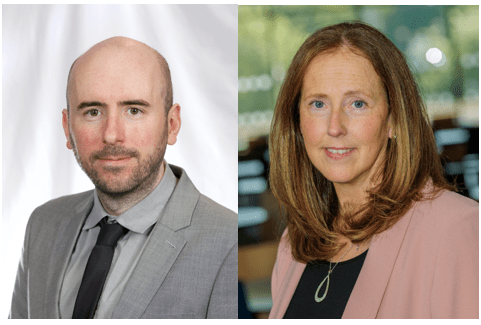
In this conversation Dara Ryder and Maureen Haran discuss the development of the ALTITUDE charter, which aims to embed UDL across Irish higher education institutions. The charter includes four pillars: teaching and learning, student support services, physical environment, and digital environment. They emphasize the importance of collective agency, collaboration, and a shared language for UDL. Resources include digital badges, a technical report, and a toolkit for implementation.
Resources from this episode
ALTITUDE Charter, Technical Report and Toolkit
ARK – Free UD and Digital Accessibility Short Courses from AHEAD
The UD Beyond the Classroom and UDL Badge – open for registration
ATU – Post Graduate Certificate in UDL
Express Your Interest in Joining the ALTITUDE Community
MU- Introduction to UDL micro-credential.
Transcript of this episode
SUMMARY KEYWORDS
inclusion in education, UDL, UD charter, tertiary education,
SPEAKERS
Dara Ryder, Mags, Maureen Haran
Mags 00:00
Okay, welcome to Talking about all things inclusion, a podcast where I get to meet and learn from people in the field of inclusion in its broad offense, that inspire me. I hope they’ll inspire you too. Today, I’m talking with Dara Ryder and Maureen Haran to discuss the Universal Design for Learning, UD charter for tertiary education. Dara Ryder is chief executive officer of AHEAD an Irish NGO established in 1988 which is dedicated to creating inclusive environments for people with disabilities in education and employment. He became CEO in 2020 having previously managed ahead digital presence and developed a suite of online CPD programs related to Universal Design for Learning and inclusive practice in his role as digital media and e learning manager there, this included co leading the development of a national UDL badge program with colleagues in University College Dublin, a 10 week program which has now been taken by over 4000 educators. In recent years, he played a significant role in the cross sectoral team which developed altitude, the National Charter for universal design in tertiary education. In 2024 Dara was recognized for his work in promoting the UDL framework internationally by cast, who awarded him the inaugural UDL innovative practice award. So Maureen lectures on teaching and learning programs in Atlantic Technological University ATU and co- wrote and chairs first postgraduate MA program in UDL in Ireland. She also manages the university’s UDL Center of Excellence. Her initial degree is a BA in education from Northeastern Illinois University. She is a senior fellow of the HEA and a PhD candidate at Queen’s University Belfast, where she’s carrying out research on effective, inclusive teaching practices in Ireland’s higher education system. Maureen works with educational development teams to design and implement inclusive education practices at regional and national levels. Maureen has worked as an educator in both the Irish and American public education systems for over 20 years, and has been an education reformer in working with educational development teams in both countries to design and implement inclusive education practices. She continues to work on inclusive education initiatives by leading on continuous professional development of academic staff, and actively works on nationally funded projects on Universal Design for Learning implementation within the third level sector. More recently, Maureen has led the national ALTITUDE charter project development team, and is strongly committed to working with internal and external teams on the adoption and implementation of ALTITUDE. Dara and Maureen, I’ve known you as two separate entities and as the lead of the altitude charter for many years now. So I’m absolutely delighted that I have this opportunity to share your general work, but more specifically, going into this charter for tertiary education on UD as well. So thank you very much for joining me today.
Dara Ryder 03:14
Mags, it’s good to know that we’re myself and Maureen are two separate entities, because we’ve been working so closely together for the last few years, I sometimes doubt it myself,
Mags 03:23
you do merge into one person sometimes
Dara Ryder 03:26
it’s great to be here. Max, thanks for the invite.
Maureen Haran 03:28
Thanks very much. Mags, very happy to be here today.
Mags 03:32
Okay, so it’s always challenging when I ask you to focus in on one particular aspect of something you’re very passionate about. So just to balance that out, I’m going to ask you to start off by telling us a little bit about yourself in broader terms, and then how you became involved in the charter for tertiary education.
Maureen Haran 03:55
Sure, I’ll go first, and I happy to be share, happy to share a little bit about myself and how I became involved with UDL, kind of first, and then how that led to my involvement in the national altitude tertiary charter. So I guess a little bit about me, prior to teaching here in Ireland, my background was teaching middle school English, so teaching reading and writing to adolescents age 12 to 15 years of age. I taught. I taught quite a diverse it was quite a diverse public school in Chicago that I taught in. The school offered mainstream, gifted and special education programs with enrollment of 1500 kids, and the middle school curriculum is it’s more or less a transitional space for adolescents from primary to secondary education. So that means the students change classes every subject for every subject that they had to get in the practice of the expectations of secondary setting. So this also meant that every 40 minutes, I had a different set of students, so a different class of students with varying. Abilities to work with. So I was responsible for the progress of approximately 250 students a day, and I taught mainstream and co- taught with a special ed teacher, which is the norm, kind of in the States. So this experience gave me the opportunity to explore some outside the box, different types of approaches to cater to this type of variability the education system there is a little different in terms of the high stakes teaching and learning approach. And these students had benchmarks years which was measured through rigorous achievement testing, MAP testing or measurements of academic progress. And this meant that you had to be kind of on top of the data of their progress and consistently aiming to raise the bar as your own Annual Evaluation reflected on this as well. So I began teaching during the era of differentiation, and became quite familiar with Gardner’s mi theory in hopes to address this type of diversity. And I had heard of UDL, but there wasn’t a lot of data yet on its effects at this time, kind of the early 1000s, but it continued to be like a widespread whisper in the background, and I always had my finger on the pulse of kind of all things inclusion and hopes to try to reach that variability that was in front of me. So my journey with UDL then really began when I started working in a two Sligo as a disability officer in 2015 I was doing learning support and disability kind of double jobbing in the role, and I was carrying out needs assessments for students with many different types of disabilities and learning difficulties. We know that there are far more students with with these needs that choose not to disclose and therefore are not entitled to learning supports. And it always bothered me that students needed to disclose to receive access to their education, and I always felt that it was the responsibility of the teacher or the lecturer to address their students variability. So I began to converse with other colleagues nationally, and specifically the Disability Advisory working network group here in Ireland, or better known as the dawn network, and that comprises of disability officers across higher education. I came across the work of AHEAD in UCD on the UDL digital badge in around 2017/2018 and I reached out to Dr Lisa Padden from UCD, who kindly met with me and brought me through the badge and helped me to get the badge set up so that I could facilitate it in a to Sligo, and this enabled me to work with colleagues, to support them through this, this continuum of professional development. It really took off for us when I began lecturing in 2019 and I integrated the badge into the post grad certificate in teaching and learning, and I also wrote it into a few different education programs as well. I could see the positive effects that the CPD was having on my colleagues, and there was a thirst for more, which led me to to then co develop the postgraduate certificate or master’s in UDL that’s running in ATU. All of this kind of background grassroots efforts that I was involved in then led to collaborating nationally with colleagues and the altitude initiative began a little over two years ago with a call to all higher education institutes for path four funding from the HEA, which addresses the key pillars of the national access plan here in Ireland. So each institute was invited to respond to a call for ring fence funding to address UDL in phase one of this initiative. And this prompted the AHEAD think-in which Dara might elaborate on a little bit more, but basically that brought all the institutions together to kind of bring our heads together collectively, to devise a plan to do something collectively which would have a meaningful impact, as opposed to bespoke little initiatives, which is what was happening here, quite strongly across further in higher education here in Ireland. So the thinking was highly effective, and four national projects emerge, one of which was the altitude charter. And I’ve always been passionate about creating more inclusive and accessible educational environments. So when the opportunity rose to lead the development of the altitude charter, I saw it as the perfect chance to make a meaningful impact on a larger scale. The altitude charter is designed to elevate tertiary education by embedding the work of Cheryl bergstellers work across institutions nationwide, and it’s more of a whole institution approach to inclusive practices. So over the past two years, I’ve had the privilege of leading a dynamic team in this ambitious project, and together we’ve navigated the complexities of developing this comprehensive charter that aligns with national educational standards.
Dara Ryder 09:32
Yeah, I suppose from my own my own story is kind of goes back to being an educator in further education training. So I’m actually my field was actually music technology. Its the field I graduated in, and I began teaching, in effect, sort of context around music tech. I suppose very quickly I began to realize that I was much more interested in working with the students with disabilities in my classroom than I was with teaching music technology in any way. So I found the whole thing fascinating. And it was a time of of immense realization for me that I actually was carrying an awful lot of attitudinal baggage that I, that I, that I didn’t realize. And, you know, I began to get quite frustrated, I suppose, as I was, as I was working with these students, and realizing that actually the biggest problem they had was me and the stuff that I was doing, the way I was presenting my content. So I suppose through that process of working with them, I began to help get a little bit better at that teaching. And I suppose what I was doing in those contexts was probably what might be described, in some cases, as UDL practice today, where I didn’t have a way to to vocalize that. I suppose what was happening there was that, that mindset shift where I was, I was really locating barriers to learning suddenly, within the curriculum, within the content, and away from the students themselves. So when, I suppose when the concept of universal design, then, was when I came across that concept, and I actually came into it more from a UD perspective, forced, rather than a UDL perspective. And that really just gave me, I just identified it straight away. It gave me a language to talk about what I was feeling in the classroom. So when the opportunity came up to work with the AHEAD initially on a research around disabled students and their engagement with higher education, but then broadening out over time, into professional development in the field of UDL and in other fields as well, and then eventually into kind of strategic projects. That’s really how it came to the field, in terms of where I came from, with the altitude, piece of why, I suppose, the impetus that brought me into this project, Maureen mentioned the thinking that I had held where we brought stakeholders together to try, I suppose, to try and say, Let’s not go off and do our own thing and in 21 higher education institutions, and let’s instead see if we can pull this money to do something more significant at a national level. And what was buzzing around my head at that time was, was a couple of things. First is that we did a piece of research in the head, which kind of looked at the state of play with UD and UDL in Irish practice and policy and tertiary education context. And what I found was, first of all that actually Arden has a relatively strong national policy commitment to UDL and tertiary education. So we have national policies in FET and he both strongly advocate for that approach and recognizing it, and we also had a lot of evidence of engagement on the ground, so projects, institutional projects, at the kind of ground level, also evidence of this rising engagement with CPD mentioned there over 4000 educators have taken the UDL badge as an example of that, but also lots of other local examples of of practice being promoted. But actually, when we did an analysis of the strategic plans of our higher education institutions and the performance agreements, which are these agreements that the institutions make with the HEA, we found that actually it was very much missing from the strategic level of the dialog. So we actually saw that as a massive threat and risk for the sustainability of this practice. And really we began to have these conversations, how are we ever going to get past the sort of committed champions phase of UDL, if we don’t have that? So really, when we have those thinking conversations, that was really a big theme of this conversation, and I suppose that piece of research has maybe expressed something that everybody else was feeling within the community, you know, starting to hit against that brick wall of, Okay, we’re coming to the end of the road with the people who are naturally interested in this thing. How do we move forward? So really, altitude is an attempt to address that and to give us a much more sustainable path for this practice over time.
Mags 13:35
And you’re right, Dara, like when you talked about the champions there. You know, sometimes the champions end up just being exhausted, and there’s a fatigue because they’re, they’re carrying the shoulders of a university or further education center. When both, um, you Dara and you Maureen were talking two very strong themes came out, and both what you said, one was the responsibility of educator, the more and you talked about, talked about that at the general level, and are you brought it right down to the problem being you when you were in the classroom, and the frustration and the baggage. And the second one was again, coming from that responsibility, that there needs to be a meaningful, whole and collaborative approach to UD and UDL, I’d love to know how the charter, now that it’s out there, how the charter is going to help that meaningful whole collaborative approach to us taking responsibility for the inclusion of our students.
Dara Ryder 14:39
Yeah. So I suppose the first thing I’d say is, first of all, absolutely collaboration was key to the whole project. And I would say that the actual process of development has been a fourth stage, and what we would see as a cultural change in and of itself. So the project team was 52 members strong. It had representatives from right across the higher education institutions and as the Education Training Board. So it’s a cross sectoral project. That was very intentional decision that we made very early on, that we need to do this as a tertiary system and not sort of have these crazy separations of cultures. So we want to bring people closer together in that regard and see what we can learn from each other. And we actually designed the consultation process very specifically with that idea of building collective agency. And I’m familiar with the whole literature around this room, social cognitive theory and bandura’s concept of collective agency. So we actually designed the consultation process very much with we want to start a national conversation give people direct input into something that’s meaningful and sustainable and actually involve all the players from the four pillars of the Charter, which Maureen alluded to earlier on, involve all those stakeholders in the process. So in terms of what that actually looked like from the development process point of view, we had, first of all a sort of project team consultation for sort of winning the 52 member expert project team. We kind of did that for us, and that gave us some kind of key questions that we wanted to answer. Early on in the process, we had a national stakeholder event, which took part faces part of the ahead conference where, which was a 90 minutes at each day, over two days of a head conference where we brainstormed the barriers to the systemic implementation, and then brainstorm collective solutions once we’d identified those barriers in the second day, we then moved through this whole process of doing Authority staff and learner focus groups to identify the challenges around the implementation, get direct feedback on the early draft of the charter as it was developing. Out of that consultation, we also did both a large scale learner surveys, over 1200 responses to a national survey, and a kind of more deeper stakeholder dialog process, where myself and Maureen engaged with national agencies. We engaged with, you know, we spoke with the HEI registrars, with the ECB fed directors. And so we had this process, this national conversation that was going on around the development. So that’s that’s one thing to say about it in terms of how we chose to address the second part is, what’s actually in the charter itself. I don’t worry. Do you want to speak to this part? I feel like we don’t have the conversation too much
Maureen Haran 17:14
not at all. You’re doing great. I’m actually enjoying listening to you. And so the content of the charter, then we have the four different pillars. It’s based on Cherry Bergstrothers work in Universal Design for education, in education. So the idea being that it’s, you know, there has to be a whole systems approach to inclusion. It’s not just, you know, anybody specific job you’ve often heard of, you know, Frederic Fovet referred to people in institutions as the UDL guy, well, that’s, you know, we’re, we’re going beyond that within the charter. It’s looking at the teaching and learning. It’s looking at the Student Support Services, the physical environment and the digital environment as well. So the the pillar itself, has a lot of the criteria that was built, and it came from all the consultations that that Dara has just mentioned at each phase, we went back to, you know, the drawing board and redrafted again to bring it to its final stage that it’s at, but it’s to provide a vehicle, really, for institutions to declare its intent to make incremental and sustainable progress towards embedding universal design approach. You know, this is something that has to be very much a living document, and we wanted to be in line with its with the culture and the strategy of the institutions is promote the development and sharing of policies, structures and strategies within institutions to support sustainable implementation and support a culture of shared responsibility for universal design, access and exclusion. So it’s the everybody’s business approach develop a more unified language of commitment to universal design approach that was one of the things that we we also knew, you know, is very important that within each institution across the tertiary sector, there had to be a fostering of greater opportunities for partnership, collaboration and shared learning, especially within Ireland. With this that a different approach that we now have, that we’re working on in terms of a tertiary sector support your institution is what’s another big key driver for us. We want to make sure that everybody’s complying with Irish law and working towards goals and a range of key national and international strategies. So the charter itself, we have strategic enablers that can be developed over time within these four different pillars as well. We have gone through, as Dara has mentioned, massive consultation. We’ve also brought it out to all of the major stakeholders to have a good look at it and give us, you know, very meaningful feedback to see what also needs to be considered within the implementation and adoption of the Charter, which are the next actual phases or stages in terms of actually bringing this theoretical piece into practice.
Dara Ryder 19:59
I think there’s a. There’s this whole piece around one of the things, the concepts that we try to think about as we’ve developed the charter, is we’ve been using this phrase for a long time, inclusion as everyone’s business, and I think there’s kind of generally a tacit support for that statement. But then what does that actually mean to operationalize that? And really what, that’s what the charter is trying to do. So from the nuts and bolts piece, okay, we have all these goals within the charter, but what it does do is actually commit the institution to establishing a working group at the most, most senior levels within the institution that includes key representatives from across the four pillars, and there’s those who have responsibilities for key services and tasks and departments across the four pillars of the charter, and to to actually begin to operationalize this charter over time and work towards the goals within the pillars. And so it’s about actually sort of getting people to look at their own responsibilities through the UD lens. I think for far too long, we’ve relied on specialist services to support our students. And this is an attempt to say, actually, you know you have inclusion responsibilities no matter who you are within the institution. And so how do we make that happen over time? It’s by hopefully encouraging progress on the strategic enablers in a kind of meaningful and sustainable manner. And that isn’t trying to maybe change everything overnight, or expect people to take on massive male responsibilities overnight, but slowly shift the culture of the institution in a direction that brings us closer to what we would class as a university designed experience.
Mags 21:30
And both of you, when you’ve been talking, have kind of leaned in towards that language space and having a shared language, like, what does everyone’s business mean, and I know this charter worked really hard for there to be a shared understanding for the Republic of Ireland on what UD and UDL is, and that’s so important. Like in February, a different agency released a policy advice paper that misinterpreted or misunderstood UDL, which caused an awful lot of problems. So this is a difficult one to ask you to do in a short space of time, but if I was to ask you, what is that shared definition or shared statement that you have that we should all be leaning into when we engage with the charter?
Dara Ryder 22:19
So in terms of a in terms of what the definition of UD is. Well, in a very technical sense, we use the definition of universal design as it is within the UNCRPD. That’s the definition that it’s drawn from. So from a very technical sense, we use that, but for from a kind of more cultural sense, really, it’s about where we I think, for me, it’s about where we locate barriers. It’s about designing out those barriers at the point of delivery to the greatest extent we can. I mean, that’s what we have to be thinking about, no matter whether you’re in the teaching and learning space, no matter whether you’re in the space of the digital environment or the physical environment. It’s how can we allow people to bring themselves into the space and be themselves and get the best themselves in a space without having to jump over ladders and walls to have to do so, so, but I suppose, from a technical point of view, just in terms of your UDL podcast, largely here Max, but we’ve taken UD as the overarching umbrella, and so we see, we’re seeing kind of UDL as part of the teaching and learning pillar within within that. So we’re trying to create that shared space by giving us anchoring it all under a universal design umbrella, and then having various guides and frameworks so that in terms of the shape of the charter, what you’ll see is that there’s key frameworks and guides associated with each pillar which kind of help us to delve a bit deeper in our pillar and give us a more role based focus for our practice. And we’re actually trying to line that up as well with how we do everything on a strategic level. So as an example, the UDL badge, which has been a very successful PD project run by a head and UCD over the years, has kind of expanded now this year, to have a second badge, which is UD beyond the classroom, which the badge is, again, mirroring a lot of the same types of language, but very much focusing, one, focusing on the UDL framework for teaching and learning. One, focusing on how you can UD your student services, your digital environments. And that’s going to roll out this year, and we’re seeing that as well with other projects, for example, the ahead UCD John Kelly awards, although this year they’re running as UDL awards in the future, they will also begin to bring expand out to look at the other pillars of the charter. So we’re hoping that the national language can begin to sort of coalesce around those things and others across people are doing in the sector. For example, there’s a great project which I think, I’m not sure if it’s ATO or MTO or leading it, but they’re certainly both partners and to develop a a module for senior leaders. So it’s a UD in leadership, leadership and universal design module, and that’s really trying to address some of our piece, where we know that we need, need our leaders, both supporting and also visibly modeling UD in what they what they do as leaders, that this is going to work in the long. More time. So addressing that with this kind of voice size. PD, so I think Maureen, you might have different, different view on the on the language, very
Maureen Haran 25:07
much along the same lines. Dara, what I would add to that is, obviously, I’ve come from more of the teaching background, and under that pillar and UDL, very, quite strongly. And one of the things that I’ve always kind of said about Universal Design for Learning is that it’s, it’s really, it’s about inclusion for all students, not, you know, not just students with a disability. It advantages students with disability, but it also advantages all students. So if you take that and kind of, kind of widen that, that band, it makes sense, that universal design now comes more into play, and UDL is kind of coming under the teaching and learning pillar, and that we’re looking at inclusion more broadly through universal design across all of the different pillars, and as Dara said, the different frameworks that fit with within those as well. So for me, that has altered and changed, and I had to get my head around that at the very beginning, because I was always very UDL strong. And always thought, we know this was about teaching and learning, but really it’s about so much more so that shared language and getting everybody to understand that. And those are conversations I know that I’ve had within my own institution because we’ve been so UDL strong. It’s, well, where are you coming now? With with UD specifically, and it’s, it’s saying, whether it’s more of a large umbrella, and there’s so much that fits underneath this, this umbrella as well. So it’s about widening that language too, yeah. And
Dara Ryder 26:29
that’s, I mean, that’s the kind of madness that we’re trying to address with attitude, is that you have a situation where, okay, on the one hand, maybe an institution is trying to promote a UDL approach. On the other hand, you have someone who’s in the States, for example, who’s organizing and upgrades to rooms who never speak to educators. How can you operate UDL in a space that isn’t universally designed? It gets very, very tricky to do that. So that’s where we need to engender much more collaborative dialog around these ideas, so that people can begin to understand the different needs and challenges of learners, wherever they are in the college, whether they’re in the classroom or whether they’re trying to study in a social space across the corner, or take an online lecture in a busy library, or all those things. So yeah, I think that that was certainly a big, a big eye opener for us, as we did this, is that we began to understand that even ourselves, like me, as a UDL head, didn’t know an awful lot about some of those other other pillars that I really ought to have known a lot more about. So that was a really brilliant experience for us within the project team was actually just engaging as as peers in those kinds of dialogs
Maureen Haran 27:41
across sectors. Sorry, megs, yeah, no,
Mags 27:43
no, you’re fine. I was going to say, and what the charter is doing, actually, in Ireland, for the first time, is breaking UDL and UD apart because, you know, especially at the beginner phase stage for for learners, the term was used very much interchangeably, and that’s what happened with that recent policy advice paper that they used UD and UDL interchangeably so that no message got across. So I love that you’ve got this umbrella. You’re very clear this is UD, and this is what’s coming below it, and you’ve aligned UDL to one pillar, which is teaching and learning. Now we’ll have listeners here who won’t have heard of the charter until they’ve turned on this podcast. So can you tell us a little bit about the other three pillars and how they are promoting inclusion under this UD umbrella? UDL as one part,
28:37
sure. Can we
Maureen Haran 28:39
go one point and so within the other pillars as well, we have, as I mentioned, the student and support services, and then we have the physical and digital environment as well. So one of the key drivers that we’re going to see change, not changes, but really bring this forward in time to come, is that new digital badges are talking about the Universal Design badge. What’s the title of that badge? Beyond the classroom, beyond the classroom, that’s it, sorry, which makes so much sense. So within that, all the different services are going to see where they’re, where they where they come into play within inclusion, within the their institutions as well. So within the charter itself, as UDL says, under the teaching and learning pillar. But with UD more broadly, we have, you know, for example, with the physical environment, as Dara mentioned, you know, the estates might be aware of, you know, they’re a piece of inclusion, but they’re already doing so much that they don’t even realize. And in each of the pillars, this is true. We’re, we’re actually doing a lot more than we realize, but it’s actually putting the language around it, making sure that we’re carrying this through. So there’s, there’s different, you know, frameworks that fit within these different pillars and structures as well. and that all comes together and plays a piece too. But as the UD beyond the classroom starts to develop, I think everyone’s going to see their their fit within a larger picture as well. It’s all coming together at the same time, lot of moving parts, but it’s, it’s kind of where we’ve we’ve come to within the country. We’re all kind of doing different things, but now we’re coming more collectively together and putting these, these pieces together. So the charter kind of caters to all of that as well. And as I said, it’s going to be a living document. There’s, you know, we have an adoption phase and an implementation phase to go through. So there’s going to be a lot of training that’s going to have to happen down the line, you know, to make sure that we’re all aligning to one goal,
Dara Ryder 30:42
I think what might be useful sometimes in terms of like the chart, just first of all to say the charter, we have all these frameworks like UD and UDL already. Charter isn’t, obviously, is not trying to replace any of those anyway. So those are largely works that operate at the individual level. They guide individual practice for the most part. I mean, you can have an argument about that, but we don’t get into semantics around it, but they’re largely based at the individual level. So this is about how we operationalize them at the strategic level. So a lot of the pieces in the charter are actually quite, you know, pieces around technical aspects of the college experience, for example, quality assurance, you know, those kinds of things, program validation, processes like so there’s a lot of stuff in that that’s quite technical, but in terms of, in kind of layman’s terms, explaining what those other pillars are about, we actually have these kind of clear goals, which I think are nice ways to hang hang your hat on in terms of seeing what we’re trying to do. So for example, in the pillar that’s uh about support services and social engagement, the stated goal is to reduce barriers to student success by ensuring that student services and extracurricular activities are flexible and accessible for all learners. So it’s kind of clearly stated, like simple language around that if you like the physical environment, we have reduced barriers in the physical environment by ensuring they are accessible, welcoming and sensory aware spaces that support flexible use. So it’s those kinds of languages tried to solve in one sentence. What are these more technical measures are trying to help us to work towards and hopefully give that kind of guidance to the professionals who’ll be actually trying to operationalize this charter? Yeah.
Mags 32:14
And what’s great about even the two examples you gave there, it’s very clear you can’t misinterpret what the goal is, however, there’s room for flexibility within the context of the campus or the organization to make that goal their own again, which is very important in terms of the resources, the physical space you have, and all of the different things. So I love it’s clear that what you have to do, but you’ve got your flexibility and your autonomy, and going back to what one of you said earlier, you’ve got that collective agency. So you’re not you’re not directing every university to do it the same way. You’re just giving them the tools and the support to do it their way, with the end goal of being inclusive,
Dara Ryder 33:01
absolutely and like, the hope is that all of those stakeholders who’ve contributed to this process can can see themselves in the final piece in some way or another. And there was lots of things throughout the process that very much surprised us as what we thought, as ourselves as like, real UDL prowess and UD and UDL pros, you know, thinking with the draft that we come up with at the start, you know, it’s going to cover all the bases I have, and the tweets here and there. It’s like, oh no, you know. So that was, that was really, really interesting process. Like, I remember, for example, the learner, the learner consultation. One of the biggest pieces that came back from it was how much communication they get. It was like, stop communicating with me. The big things, you know, it’s like they’re basically saying, like, lots of stuff they actually need gets lost because they’re swimming in communication. And that’s something maybe I just hadn’t really considered as somebody slightly outside of the system looking in. But So those kinds of things hopefully make this a charter that’s that’s very sturdy and usable, but as you say, it was very much, very much something that we saw as would have to be adaptable and flexible itself, you know, reckon, almost taking a UD approach with its which, the way it’s designed and delivered itself, and that was kind of supercharged by the tertiary nature of the the context for this charter. So it’s a CrossFit, and HE, you know, we’re recognizing, how can we make a charter that makes sense in a small youth reach center in a small rural town and still make sense in a large higher education institution, you know? And so it’s that that sort of it pushed us to make a charter that was quite flexible, I think, in that way.
Mags 34:40
Well, you definitely succeeded. I’m wondering, just because you know this, this is one phase of a long term. You’re not just writing it and leaving everyone to their own devices, what is the next step? Is there a key date? Is there training? Is there a publication that people should be looking out for to know you. Who to go to, or what to do next, other than open the charter and read it
Maureen Haran 35:07
well. Along with this development, we, we worked with our colleagues in in UCD. They were looking at the valuable data that came from these consultations as well, and they were feeding that into a toolkit that has been developed and launched, I think, was in May or June of this year as well, kind of alongside the charter as well. So that’s an implementation toolkit that, you know, looks at the four different pillars as well. And it tries to make, you know, this phase of adoption and implementation as seamless as possible. But the next phase is really what comes next is adoption and implementation phases of the national altitude charter, we don’t have, you know, specific dates that, you know, there’s no compliancy measures. See, these are crucial, though, to realizing the vision of inclusion and transformation in education these different phases to make sure that this charter is a complete success. You know, this is where the charter kind of moves from being, like I had said before, being theoretical into practical and impacting the reality of of of education institutions. So the adoption phase is all about building buy in and ensuring that educators, that you know, major stakeholders understand the value of the charter. It’s about showing, showing them how universal design can transform their institutions, making education more accessible and effective. But it’s also about them telling us what is doable. We’ve never been disillusioned by the fact we don’t have all the answers that, you know, we need the the bigwigs at the head of the table to kind of tell us, well, you know, how can, how can they adopt this? How can they make this reality? So that’s the next phase where we’re moving into. So these, you know, different resources within the toolkit being developed to help us. You know, with the implementation phase, we have to go through this adoption phase, where we’re very much done with the development of the charter. But now we have to go through these different phases as well to make sure that the you know, there is success in this transformation.
Dara Ryder 37:04
So in terms of practicalities, what’s actually happening there? One is that we’re just in the process of developing a Terms of Reference for a kind of, basically an adoption process development group for it’s a terrible name, isn’t it? Called something catching that morning, but something around that which is basically intended to be a group of more senior leaders. So we realize that we can’t do anything at the adoption level without the senior leaders. And again, we want to have that process of collective agency. We want to carry that through into how we design the adoption process. So we launched the charter back in March, and we kind of pitched that as the start of a national conversation about how we can do this more more deeply. We anticipate that that will take time. But what we’re finding is actually a lot of institutions have have already begun the process themselves, within their own institutions, without any formal process there. I mean, it’s the charter already lays out a kind of roadmap for institutions. It lays out the kind of structure of a working group at the senior level that suggests the kinds of roles that are beyond those structures. So it already gives you all you need to go ahead as an institution if you have that internal buy in already and you want to get going. So we’re already seeing institutions do that to some degree. And so what we need to go next is have that conversation with leaders. Is there going to be a formal process around this? If so, what does it mean? What agency does it go to? Who do you apply to? Or do you know, all that kind of thing needs to be worked out. So that’s one piece. The second piece is that we’re still teasing this out, and it could take us a number of months to how it’s going to work, but we are also looking at the development of a national community of practice around altitude adoption, which will be much more about the practical implementation of the charter for those working as senior managers with responsibility within the pillars and also on the ground, as professionals in those zones. And really the whole purpose of that adoption group will be, obviously, to share learning, but it will also we’re looking at purposely designing it with a structure that will bring professionals from different zones together much more concretely. So the exchange of ideas can happen across those four pillars. Hopefully that’ll be happening on an institutional level, as part of the charter, but also at a national level. Through this community of practice, we are actually taking expressions of interest for people who might be interested in joining that community when it is open to run. So I might pop the link over to you Mags if it’s okay to leave it in the show notes. But yeah, we’re hoping that by the end of the year, we’ll be able to have more news about that community and what sort of shape it’s going to take as well.
Mags 39:33
Super And absolutely, I’ll put that link at the end of the podcast. And speaking of links, Maureen, you’ve already mentioned the toolkit, but are there any other links or resources that you would recommend to listeners just so that we can upskill and learn a little bit more about this?
Maureen Haran 39:49
Yeah, absolutely. So at the altitude Charter, the technical report and the toolkit. So one of the things that also happened in tandem with this project was a. Development Group team came together to produce a technical report with the help and support of Dr Joanne banks from Trinity College Dublin, who helped us drive that so that technical report is available that explains, kind of gives the content of the, you know, where we’re coming from within policy and sector, talks about, you know, what institutions were kind of doing bespokely What exists more broadly, how this has all come together, the importance of it and kind of the next steps. So that’s available mags as well as Dara has given us some really good resources from ahead the there’s a head journal opinion article, the altitude charter can help us to operationalize and inclusion as everyone’s business approach that’s available ahead also has arc, the free UD and digital badge, a digital accessibility short course from ahead. I many colleagues who’ve gone through that and found it really helpful. The UDL digital badge is opening for registration again shortly. I facilitated in a to, it’s a wonderful, wonderful program. It’s over 10 weeks, and it gives you kind of the initial understanding of what Universal Design for Learning is. And it gets you kind of look at one thing that you can kind of change within your practice to make it more inclusive. And you kind of you gage that over, over the 10 weeks. You also work with the triad group to to kind of bring each other together and to peer review each other’s work. Wonderful, fantastic engagement. You can get you to work with colleagues from across the country. And then I also have a link there for you on the A to post grad certificate UDL, which is kind of a lead on, then from the digital badge as well. Am I missing anything there? Dara
Dara Ryder 41:42
just to flag the UD beyond the classroom badge is also opening for registration for its first national rollout this month as well. So that will be open for professionals in tertiary education working in non classroom based roles, so student services or admissions or library or wherever you might be based, and that’s open as well. And just the flag that those courses are those the UDL badge and the UD beyond the classroom are only for tertiary Ed professionals. Unfortunately, it’s just a funding constraint there, whereas the arc ones, which are the two hour short courses, are freely takeable by anybody. And you can take those on a heads platform, or indeed, organizations can pull them in on their creative commons into their own learning management systems too. And just before we kind of close, I might just give a big shout out to our colleagues in UCD access and lifelong learning, just to say that their their work on the toolkit for inclusion in higher education institutions, back in I think was 2017 that was published, was very influential in the ideas that drove this project. So shout out to them as well, for the for their leadership in the space too brilliant.
Mags 42:47
And just so that listeners know, because you’ve been super you’ve given us loads of resources there. They will all be in the transcript. You do not have to pause and go back to find them. They’ll be in the transcript. Thank you so much for all those resources and the conversation today, because, like, I was part of that working group, and I actually feel I’ve learned a little bit today about the background that went into it as well. So do either or both of you have any final words that you would like to share with everyone before we do finish off today, I’d just
Maureen Haran 43:17
like to say as a final message to everyone involved in this journey so far, just words of encouragement and gratitude. The work wasn’t easy. Everybody kind of pulled up their socks and took a part at 52 members of the group, the subgroups, everyone really collectively came together. It was a fantastic project to be a part of, you know. And I just want to thank say thank you to everyone who’s been a part of this process and that there and that their dedication was really, really inspiring.
Dara Ryder 43:47
I’ll take the opportunity max to sort of commend you on your leadership in this space. I’m going to make you embarrassed now for a while now, but your work in this space has been very influential on me, certainly I know many others as well, and especially, I think your role in kind of widening out the conversation. I’m very much a tertiary professional, but think you’re playing such a leading role in looking at it in primary and secondary, especially right across the whole system. So congrats on the podcast and everything you do, and I’m hoping that the conference is shaping up. So look forward to engaging with you at that
Mags 44:22
thanks. Tara, so much appreciated. Um, you and you have embarrassed me. So I go back to my notes now. So on that note, I say goodbye to everyone. Thank you so much for joining myself, Maureen and Zara, for talking about all things inclusion, and I hope you will join me again soon. Zara and Maureen, thank you again. So much for sharing with us today. Really, I’ve learned things today, but I did not know about the charter. So thank you. Thanks
Dara Ryder 44:50
very much. Mags,
Maureen Haran 44:50
thanks. Mags, you.
 Equity In Mind